Research · Hypothecist
UX Research at Hypothecist
A freelance UX research internship at Hypothecist, a product innovation consultancy — usability testing and synthesis for Moladin, a used-car and financing platform, and discovery for Hypothecist’s own research product.
- Role
- Freelance UX research intern, co-researcher with a senior researcher
- Timeline
- September – November 2021
- Clients
- Moladin; Hypothecist (internal product)
- Methods
- Research plans, stakeholder sessions, recruitment, moderated usability tests, in-depth interviews, journey maps, service blueprint, HMW prioritisation
- Outcome
- Co-ran two studies from plan to report in about six weeks, and supported the synthesis of a third.
Problem
Teams needed evidence fast: where agents struggle in a new financing flow, and what product and UX researchers actually need from a research tool.
Goal
Plan, run and synthesise lean studies that product, design and business could act on.
01
Moladin: Dana Tunai usability test
Moladin was revamping its app around its product pillars. We tested the Dana Tunai (cash refinancing) application flow with the people who use it every day: agents, an agent success officer (ASO) and a sales manager.
- MethodModerated remote usability tests, 60 minutes each, on Google Meet. The moderator shared the Figma prototype and moved the cursor as participants directed.
- ParticipantsRefinancing and used-car agents, an ASO and a sales manager.
- ComparedTwo home navigation options: four tabs versus five.
- TimelinePlanning 29 Sep – 4 Oct, recruitment 4–5 Oct, sessions 5–7 Oct, report 8 Oct 2021.
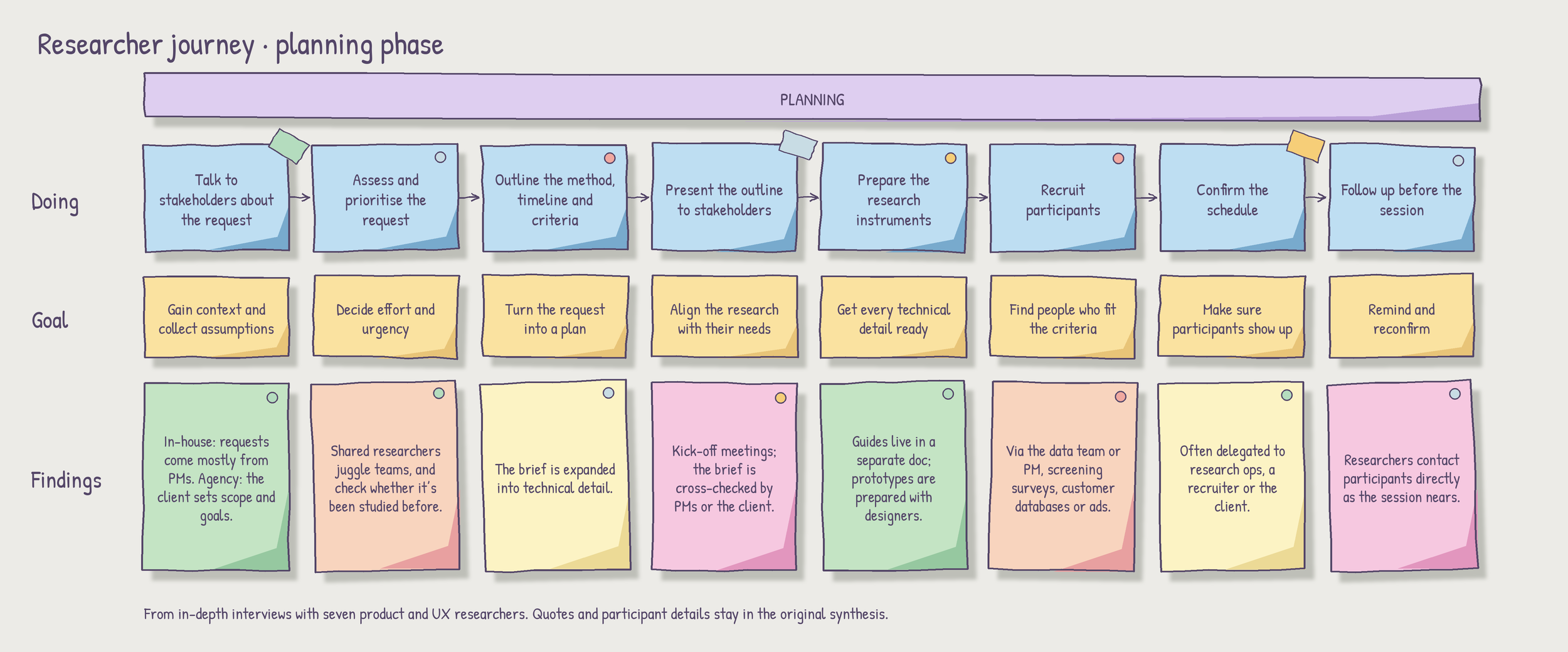
- RecruitmentI contacted participants directly over WhatsApp with a scripted invitation and tracked replies and scheduling.
What we found
- Statistics were the first thing every role noticed on the home page.
- The entry point for starting a Dana Tunai application was unclear; agents looked for a clear call to action.
- Agents noticed the progress stepper but weren’t sure what each stage meant.
- Agents weren’t sure “Hubungi ASO” would reach their own ASO, compared with the WhatsApp chats they already used.
- Four tabs felt concise. Five tabs kept used-car and financing transactions apart, but made disabled menus more visible, so some agents felt locked out.
02
Moladin: ASO research and synthesis
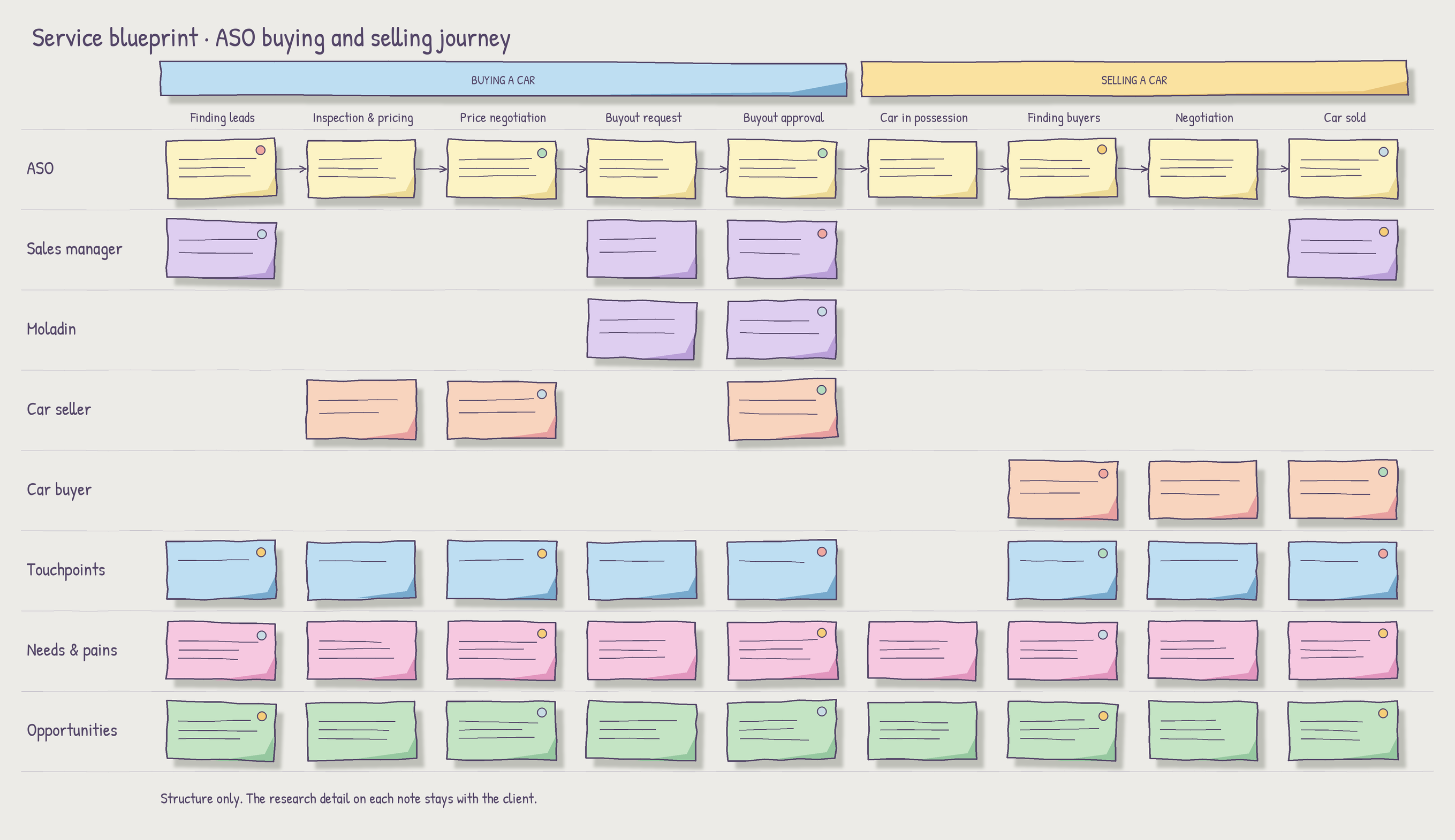
Interviews with Moladin’s agent success officers on how they buy and sell used cars, after context sessions with their managers. The team mapped the journey as a service blueprint across ASOs, sales managers, Moladin and customers, then turned the pain points into how-might-we questions prioritised by urgency and certainty.
- My rolefacilitator, note-taking and synthesis support
03
Project Jumper: discovery for a research product
Hypothecist wanted to build a product that makes product and UX research more accessible, including for less tech-savvy participants. We interviewed researchers to find which pain points to solve first, and what they would pay to have solved.
- MethodIn-depth interviews, 60 minutes each.
- ParticipantsSeven product and UX researchers from marketplace, property, agency, logistics and finance companies, segmented by company size, target market and B2B or B2C.
- Timeline1–11 November 2021: planning, recruitment, interviews, then synthesis and reporting.
What we found
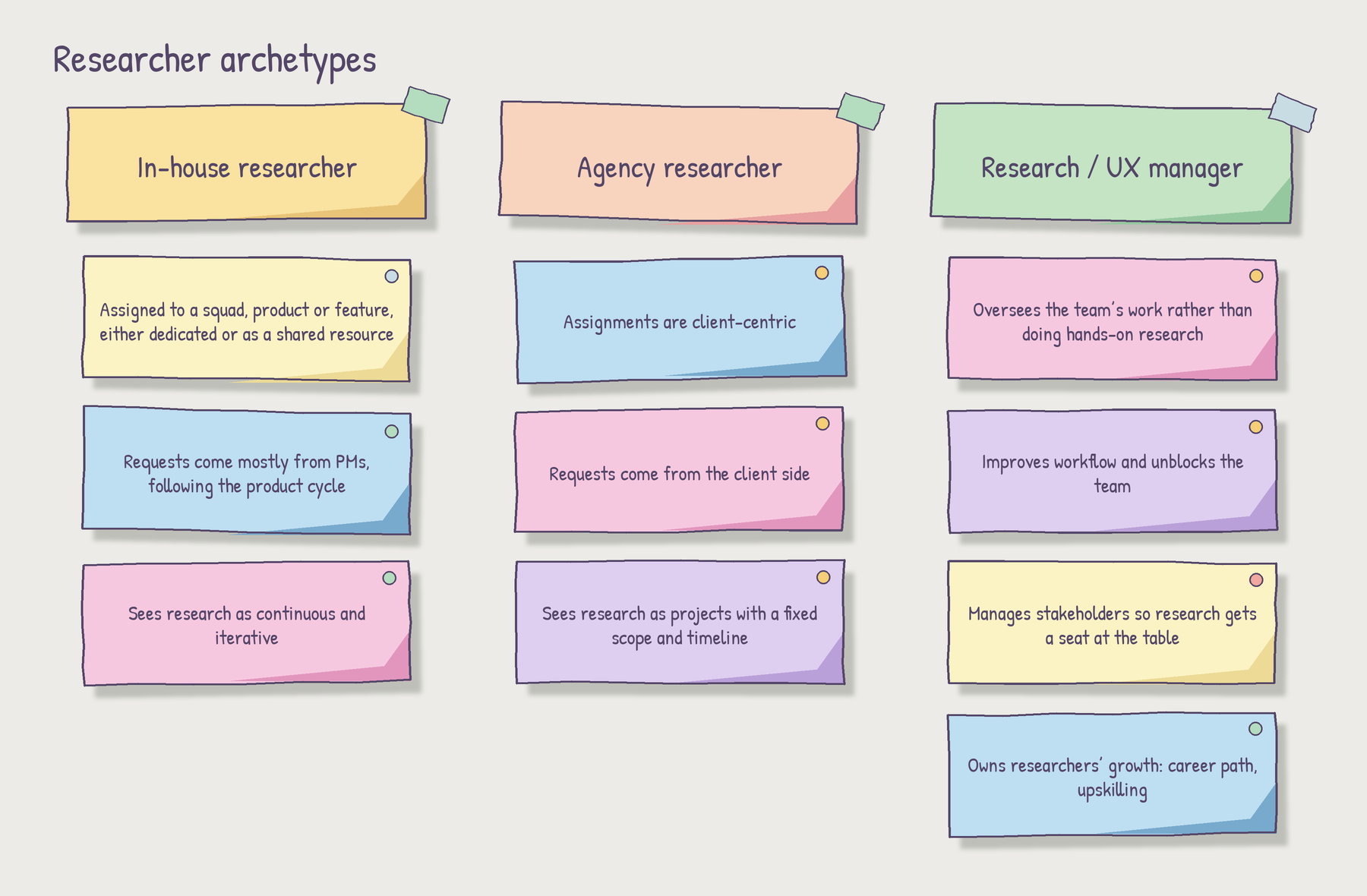
Three archetypes
In-house researchers, agency researchers and research or UX managers work very differently.
Value shapes the work
Where research is valued, it feeds strategy. Elsewhere it’s on-demand and tactical, used to validate.
Analytics as a supplement
Behaviour analytics tools often support, and sometimes replace, moderated sessions.
People, not tools
The hardest problems were with stakeholders and participants, not software.
Unclear careers
Researchers lacked a clear career path, which challenged both them and their companies.
04
Creator monetisation
At the end of the programme I was asked to map how Indonesia’s biggest creators make money. I profiled ten Instagram creators with 4.8 to 21.1 million followers, across comedy, gaming, lifestyle, fashion and business, and checked their YouTube, TikTok, Facebook and websites for every way they earn. The programme ended before I saw how the research was used.
- Own product brands
- 6 of 10Cosmetics, supplements, clothing, F&B, property, e-liquids
- Paid memberships
- 2 of 10Both via YouTube Memberships, Rp9,900–149,900 a month
- Official merchandise
- 1 of 10Plus one earning from live-stream gifts
- Paid directly by fans
- 0 of 10No donations, courses, consultations, event tickets or one-off paid content
Indonesia’s biggest creators turned their audiences into product businesses, while the tools for fans to pay creators directly were almost unused.
Snapshot from late 2021; follower counts and offers have changed since.
05
What I took away
Recruiting turned out to be research work in itself: getting the right agents on a call meant scripted outreach, steady follow-up and respect for their schedules. Moderating remotely taught me to stay neutral while steering, especially when I was the one moving the cursor for participants. Synthesis is where the value is: a service blueprint and a set of prioritised how-might-we questions gave the team decisions to make, not just a list of findings. And Project Jumper confirmed what the Moladin work had already shown me: the hardest research problems are usually about people, not tools.